
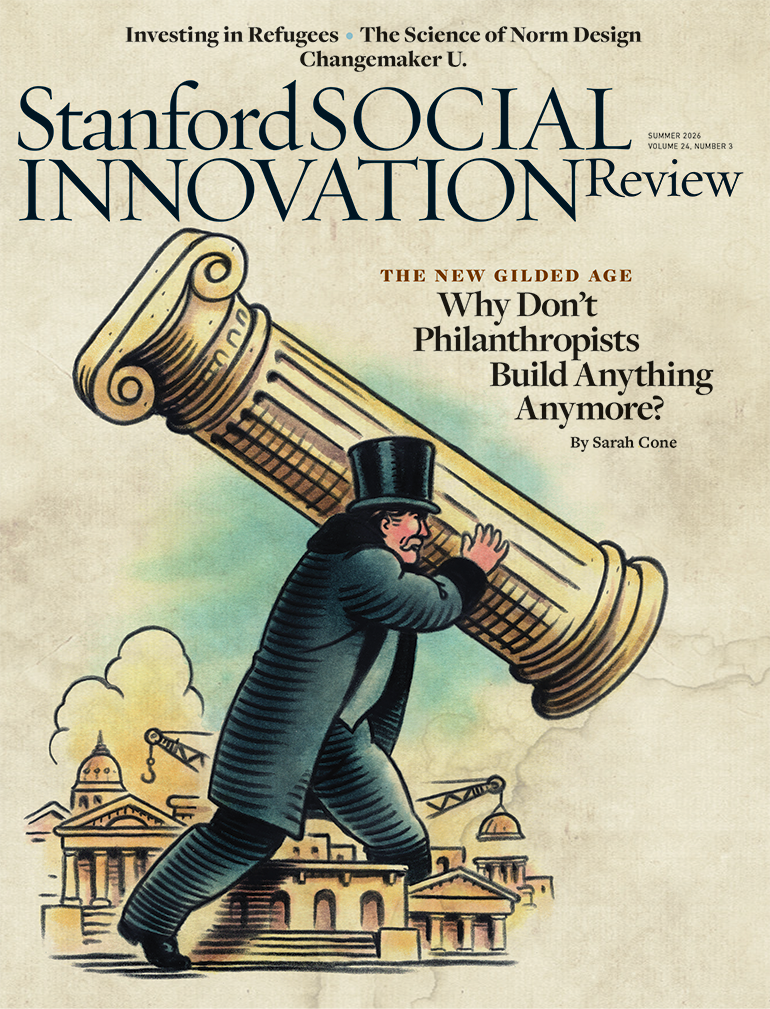


Cultivating Legitimacy in Philanthropy
It’s worth remembering that communities have the power to take away philanthropy’s social license to operate.
It’s worth remembering that communities have the power to take away philanthropy’s social license to operate.

We protect nature. We learn from nature. But we are not collaborating with nature to solve the greatest challenges a human generation has ever faced.
Making effective use of the creative power of design requires engaging entire organizations—from leadership to the front lines.
A group of diverse funders, business leaders, and practitioners are looking to quantify the potential of social design—the application of design methodologies to solutions for complex human problems—to improve lives.

The social sector needs to take greater advantage of the behavioral sciences when developing programs and services.


By working closely with the clients and consumers, design thinking allows high-impact solutions to social problems to bubble up from below rather than being imposed from the top.
Both human-centered and systems-thinking methods fit within an effective design approach, and can work in conjunction to address social challenges.
Design is a process especially suited to divergent thinking—the exploration of new choices and alternative solutions.

Principles and tactics for creating strategic convenings that foster meaningful interaction and outcomes.

An ethical framework can bridge the worlds of startup technology and international development to strengthen cross-sector innovation in the social sector.