
Making the Government Adoption of Social Innovations Work
How small and medium NGOs and social enterprises can help the public sector successfully adopt and scale their innovations.
Innovative ideas to help leaders of nonprofits and nongovernmental organizations work more effectively (more)

How small and medium NGOs and social enterprises can help the public sector successfully adopt and scale their innovations.
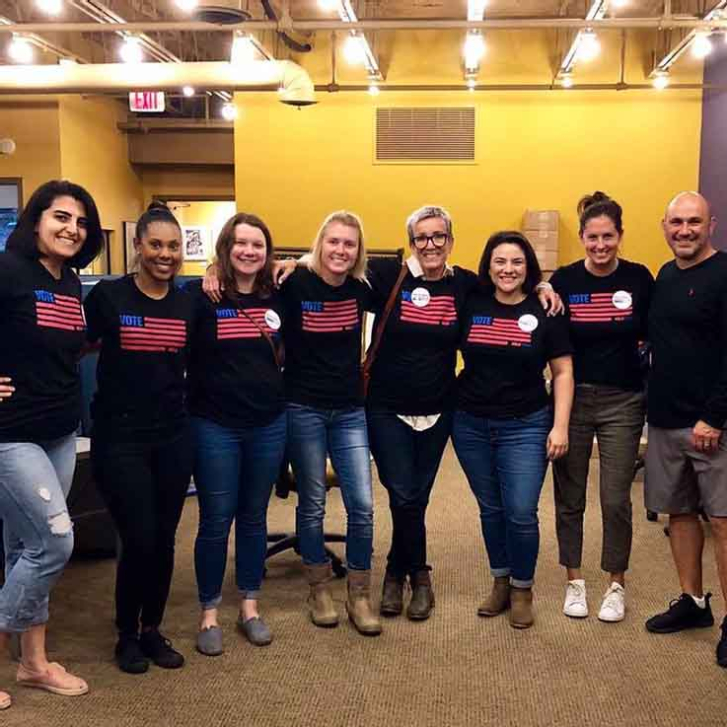
In the midst of an ongoing assault on civil rights, the ACLU’s Strategic Affiliate Initiative is helping a century-old organization grow to meet the moment.

Participants at this year’s NMI heard from nonprofit and business executives, noted academics, and prominent public-sector leaders about building a healthier future by creating personal, organizational, and societal well-being.

Telling diverse and inclusive stories for social change that center marginalized communities and build understanding requires that we show the complex ways communities experience systems of inequality.

With careful planning and resource allocation, and a clear understanding of what it means to combine different organizational cultures and visions, mergers and acquisitions can be more than an escape plan, and instead help nonprofits preserve their mission and expand their impact.
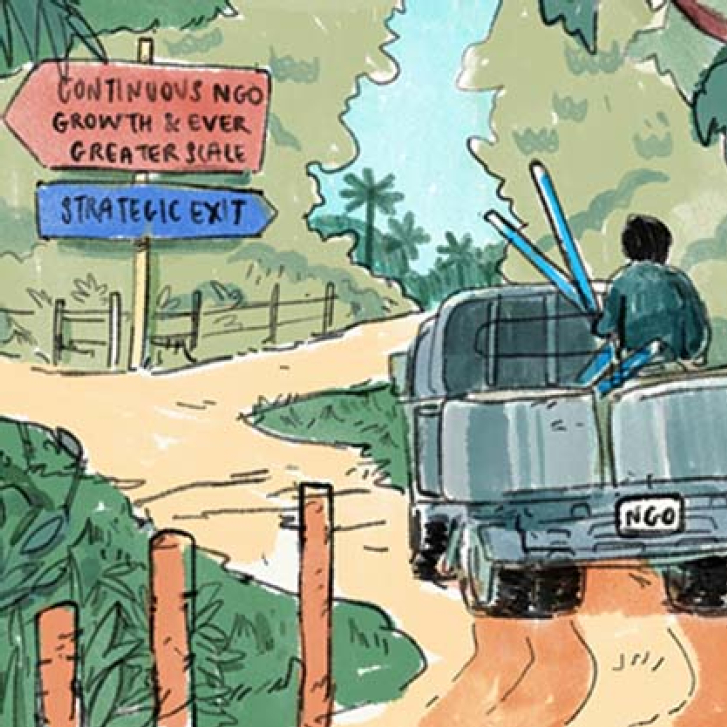
It might be a cliché, but it’s rare for international NGOs to “work themselves out of a job.” Doing so requires planning from the start, communicating clearly, setting hard deadlines, and going unconditionally.

A look at how nonprofits and nonprofit workers in the United States changed during the COVID-19 pandemic—and how to navigate the new changes ahead.
Trust-based philanthropy is becoming an increasingly well-defined approach for addressing the power imbalance in the nonprofit sector and closing the gap between funders and grantees. How does a trust-based approach to giving compare to a strategic one? To help us explore the characteristics of both, SSIR publisher Michael Voss speaks with Julia Reed of Schwab Charitable, Philip Li of the Robert Sterling Clark Foundation, and Nadia Roumani, cofounder of the Effective Philanthropy Learning Initiative at PACS. A sponsored podcast developed with the support of DAFgiving360.

To invest in and grow promising organizations and programs in a way that promotes efficacy prior to significant scaling and expansion, there are three pathways to follow: piloting, testing, and iterating.

The co-founders of She’s the First share what they learned from dropping the “child sponsorship” model that donors love.