


Philanthropy
The New Volunteer Workforce
Nonprofits rely heavily on volunteers, but most CEOs do a poor job of managing them. As a result, more than one-third of those who volunteer one year do not donate their time the next year.

Nonprofits rely heavily on volunteers, but most CEOs do a poor job of managing them. As a result, more than one-third of those who volunteer one year do not donate their time the next year.
In bad economic times, nonprofits must convince donors to give more.

Over the last decade, social entrepreneurship has exploded on the international scene, with corresponding interest in setting up funds to support social ventures. While a whole spectrum of services exists to support the financial industry, the same isn't true of the nonprofit sector. In this panel discussion, experts talk about the need for addressing the talent gap in nonprofit managemnt along with ways to lure talented youngsters to bridge this gap.
The author takes a crystal ball to the 2009 economic landscape.
How nonprofits can create quality content online.
How does an organization get through the evaluation process and live to tell about it? In this panel, part of the Stanford Social Innovation Review's conference on evaluation, funders and fundees on both sides of the table from a variety of organizations in the areas of education and social services talk about what it was like to be in the trenches of successful evaluation processes. They tease out common success factors, including how to work collaboratively across sectors and with multiple constituents.
Recent fires, floods, and foreclosures may be clear signs that we are caught in twin crises: economic downturn and environmental devastation. In this panel discussion from The Commonwealth Club of California, Van Jones and Darrell Steinberg offer a unique solution to this complex set of problems.
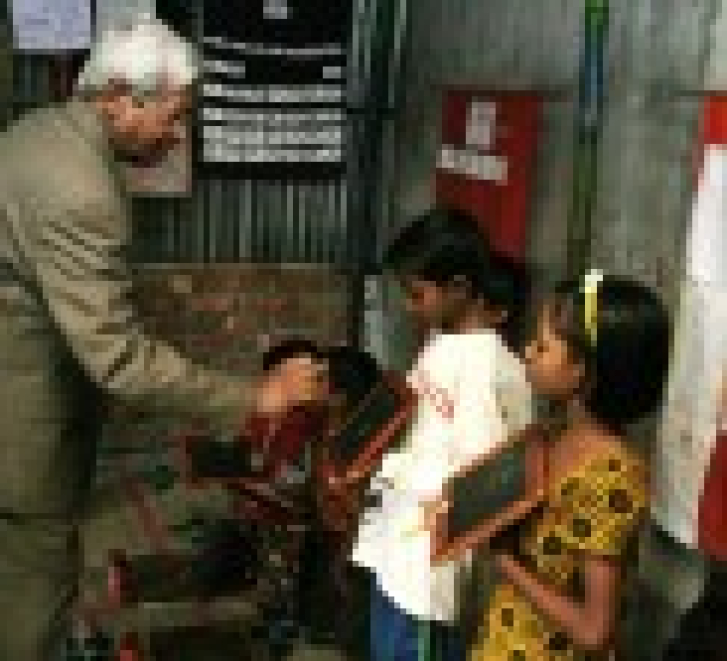
Serving more than 110 million people per year, BRAC is the largest nonprofit in the world. Yet it doesn't receive the most charitable donations. Instead, BRAC's social enterprises generate 80 percent of the organization's annual budget. These revenues have allowed the organization to develop, test, and replicate some of the world's most innovative antipoverty programs.